



Quick Summary: Using AI in shipping management systems can help optimize the end-to-end shipping operations and ensure improved efficiency, safety, and sustainability using the top AI trends like predictive analytics, automation, and real-time data analysis.
Leveraging AI in shipping management systems is one of the roaring trends in 2026 that the maritime industry can’t overlook. AI-driven systems used for automated vessel navigation are significantly impacting fuel consumption and reducing the transit time by 5%.
If you’re one of those running a fleet, managing multimodal logistics, or operating shipments across the global trade routes using that traditional procedure, then you might feel the same pressure of:
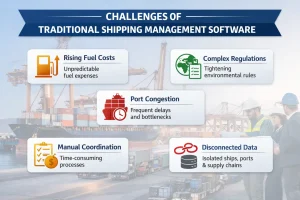
- Uncontrollable fuel costs
- Complicated yet constantly changing environmental regulations
- Port congestion and unpredictable delays
- Manual coordination across teams across global routes
- Disconnected data between ships, ports and supply chains
This is where the operational cracks in your traditional shipping system started to appear. They were built to handle basic things, hence they fail to handle this level of complexity.
That’s exactly why AI in shipping management systems is becoming a strategic priority- not just a technology upgrade.
In 2026, with the increasing shipping complexities where customers demand speed and businesses are looking for ways to save on fuel, shipping is no longer just about moving cargoes from A Point to B Point.
It’s more about predictive intelligence, automation, and extracting real-time visibility across fleets, ports, and supply chains.
If you convinced enough to embrace this change, then let’s start with the basics…
What is AI in Shipping Management Systems?
At its core, AI in shipping management systems means embedding the advanced capabilities of machine learning, predictive analytics, and automation into fleet and logistics platforms.
Instead of creating a panic situation, AI-driven solutions act smartly and provide immediate active-driven solutions like:
- Predictive equipment failure
- Optimizing routes dynamically
- Reducing the fuel waste
- Detect safety risks at an early stage
- Automate documentation and compliance
Modern shipping management system software no longer just tracks shipments- it intelligently thinks, learns, and optimizes operations continuously.
That shift from reactive reporting to predictive control is transforming global maritime operations.
Benefits of AI in Ship Management: A New Era of Intelligent Fleet Operations
AI in ship management has become a new normal, offering smart ways of operating fleets.
Today’s vessels generate massive volumes of real-time data from engines, navigation systems, cargo sensors, weather feeds, and port networks. So what’s so different in 2026?
To act smart, it’s time to let your data sit idle in the system.
This is where using AI in ship management transforms this raw data into real-time operational intelligence. This instant transnational data enables you to make smarter routing decisions, predictive maintenance scheduling, optimized fuel planning, and proactive environmental compliance.
As AI in shipping continues to mature, fleets shift from reactive problem-solving to predictive performance management. Let’s get into the core benefits of AI in shipping management operations…
1. Minimizing Operational Cost With AI-driven Route Optimization
Did you know that global shipping’s oil consumption reached 4.2 million barrels per day, which represents up to 50 to 60% of total operating cost for shipping companies?
This is where AI-driven route optimization, trim adjustments, and predictive maintenance significantly reduce fuel burn and emergency repair costs. By using AI in shipping management, you can achieve:
- 10-15% fuel saving via route optimization
- 30% reduction in unplanned downtime via predictive maintenance
- Lower dry-dock disruptions
In this highly margin-sensitive industry, even a small efficiency gain produces large financial returns.
2. Higher Fleet Reliability and Lower Mechanism Failure Risk
Unexpected mechanical failures directly impact the delivery schedules. This is where using AI in shipping management helps analyze engine data, vibration patterns, and performance logs to predict breakdowns before they occur.
- Early anomaly detection
- Condition-based maintenance scheduling
- Increased vessel availability
This directly improves on-time performance and SLA adherence.
3. Offering Enhanced Safety at Sea with AI-Driven Navigations
AI systems continuously monitor navigation, cargo stability, and weather risks, therefore helping you stay prepared in advance. Majorly, it helps with:
- Collision-risk alerts
- Weather-based route adjustments
- Automated hazard detection
4. Real-time Data Enables you Make Smarter Decisions
Traditional systems enable your team to work on outdated data, which can lead to poor decisions. This is where implementing AI in shipping management helps you understand what will happen next.
- Predictive congestion insights
- Intelligent ETA forecasting
- Real-time voyage adjustments
This transition from reactive to predictive operations is the real competitive differentiator.
Top AI-Driven Shipping Management Trends 2026
In 2026, the adoption of AI in shipping management continues to increase. But some of the most important shipping management trends in 2026 that are shaping the future of maritime logistics are:
1. Predictive Shipment Planning
One of the most powerful capabilities of AI in shipping management systems is removing all the guesswork and replacing it with predictive shipment planning.
Instead of waiting for shipping blunders to happen, AI analyzes historical shipping data, weather patterns, vessel performance metrics, and port congestion trends to forecast potential delays and hassles
This allows businesses to:
- Predict shipment timelines more accurately
- Prevent delivery challenges before they happen
- Controlling shipping penalty costs happening due to delayed deliveries
- Improve customer satisfaction through better ETA reliability
With this AI shipping management trend, businesses can shift from reactive planning to predictive planning and able to conduct seamless shipping operations across the globe.
2. Real-Time Risk Alerts
Another shift that AI is shipping management is bringing is detectipon of real-time disruption.
AI algorithms working at the backend of the system, continuously analyzing and monitoring operational data such as:
- Weather changes
- Port congestion levels
- Route disruptions
- Vessel performance issues
If a potential delay or risk is detected, the system automatically recommends alternative routes or operational adjustments.
This proactive approach enables shipping operators to prevent minor disruptions from escalating into major operational issues.
3. Automated Documentation
Shipping operations often involve complex documentation processes including invoices, customs forms, shipment labels, and compliance records.
Manual paperwork not only slows down operations but also increases the risk of human errors.
Today, advanced Shipping automation software is transforming this process by automatically generating:
- Shipping invoices
- Customs documentation
- Cargo labels
- Compliance reports
Automating these workflows reduces delays, improves accuracy, and significantly speeds up shipment processing across global trade routes.
Real-World AI Use Cases in Shipping
The growing adoption of AI in shipping and logistics is not just theoretical. Businesses are already implementing AI across multiple operational areas to improve performance and efficiency.
Here are some of the most impactful AI use cases in shipping.
1. Real-Time Inventory Visibility
AI systems perform best when they operate with accurate, real-time data.
When integrated with inventory and order management platforms, the shipping management system software provides centralized dashboards that display:
- Live inventory levels
- Shipment status updates
- Order processing progress
- Warehouse availability
This visibility ensures shipping schedules are always aligned with inventory availability, reducing stockouts and shipment delays.
2. Intelligent Order Processing
Managing multiple orders across the border with just manual spreadsheets can turn the entire system into a real blunder.
This is where implementing AI-driven shipping platforms can help automatically analyze the incoming orders and prioritize them based on factors including:
- Urgent deliveries
- Availability of inventory
- Customer location
- Shipping capacity
This intelligent order processing ensures faster dispatch cycles and helps businesses maintain reliable delivery commitments.
3. Automated Inventory Reorder
With AI-driven shipping management systems in place, you never get a chance to deal with a situation where you get out-of-stock.
Now the question is, how does it work?
AI analyzes historical sales trends and demand cycles to predict when inventory replenishment will be required.
When integrated with supplier systems and inventory tracking tools, AI can generate automated restocking alerts before inventory shortages occur.
This proactive approach helps businesses to:
- Maintain optimal stock levels all the time
- Avoid supply chain disruptions even during the peak time of the season
- Improve cash flow management by automating the inventory replenishment process.
4. Reduced Manual Errors in Operations
If you are still manually entering the data or managing the stock with disconnected systems, then often you will experience errors in shipment records, inventory counts, and order processing.
However, when Shipping automation software integrates shipping, inventory, and order management systems, data flows automatically between platforms.
This significantly reduces human error while freeing teams to focus on higher-value operational tasks.
5. Offering Actionable Insights Using Advanced Analytics
Another modern trend of AI-powered logistics solutions is their ability to transform operational data into meaningful insights.
To gather data, the advanced analytical tools analyze:
- Shipping performance metrics
- Order fulfillment trends
- Vendor performance
- Delivery timelines
These insights allow businesses to make faster, data-driven decisions that improve operational efficiency and long-term planning.
What are the Major Challenges of Implementing AI in Shipping Management Systems
Undoubtedly, AI in shipping management is transforming the way businesses are managing and controlling the shipping logistics operations, but it comes with certain challenges.
1. Data Structure, Quality, and System Integrations Matter the Most
AI systems rely heavily on accurate and structured data.
If your data is incomplete, outdated, or inconsistent, AI predictions will be unreliable. Because of the quality of data you serve to the system, it will act and react in that way.
2. Expensive Investment in AI-Technology
AI is bringing the utmost benefits, but still most businesses are hesitating to invest in it due to its initially expensive implementation cost. AI-powered logistics solutions often require investment in digital infrastructure, training programs, and system integration.
However, the long-term cost savings and efficiency gains typically outweigh the initial investment.
3. Technical Training and Skills Gap
Managing AI-powered systems requires specialized knowledge in data analytics, automation tools, and AI-driven platforms.
While adopting AI systems, organizations need to heavily invest in training and skill development to ensure their teams to efficiently adopt the change.
Choosing the Right Shipping Management System Software
Only knowing about the AI trends in shipping management and it’s benefits is not enough. To reap its capabilities in best way, it is important to select the right Shipping Management Software that fits to your needs.
The ideal Shipping management system software should offer you the following features:
- An operational dashboard where real-time entries are happening
- AI-powered forecasting and route optimization
- Automated alerts for shipping delays and any disruptions
- Seamless integration with third-party logistics platforms
- Scalable infrastructure to support business growth
Solutions like MetaShip from MetaOption are smartly designed to help businesses manage end-to-end shipping operations by combining automated workflows, real-time visibility, and predictive intelligence in a single platform.
Read Also: What is Multi-Carrier Shipping Software: Its Benefits, Use Cases & Integration
Final Thoughts
The modern shipping operations demand for more than basic dispatch management systems. Businesses are in need of intelligent systems that help analyze the large volume data, predict disruption and optimize performance across fleets and supply chains.
This is where implementing AI in shipping management systems is becoming a core driver of efficiency, resilience, and competitiveness.
For organizations looking to prepare for the shipping challenges of 2026, adopting AI-driven systems today will create a strong foundation for faster deliveries, lower operational costs, and improved customer satisfaction.
Common FAQs
How can AI transform international shipping?
AI transforms international shipping by optimizing by simply optimizing routes, predicting delays, reducing fuel consumption, automating documentation, and providing real-time visibility across vessels, ports and supply chains for more efficient operations.
How is AI being used in shipping?
AI is used in shipping for predictive maintenance, route optimization, automated documentation, cargo tracking and demand forecasting, helping shipping companies improve efficiency, reduce cost and enhance delivery reliability.
What are the 4 types of AI used in Shipping?
The four types of AI used in shipping include machine learning for predictions, predictive analytics for forecasting, computer vision for vessel monitoring, and natural language processing for automating documentation.
What is the 30% rule in AI to be followed while using AI in shipping?
The 30% rule suggests automating about 30% of repetitive operational tasks using AI while keeping critical decision under human supervision to maintain safety and compliance.